 Herring
 What Was There
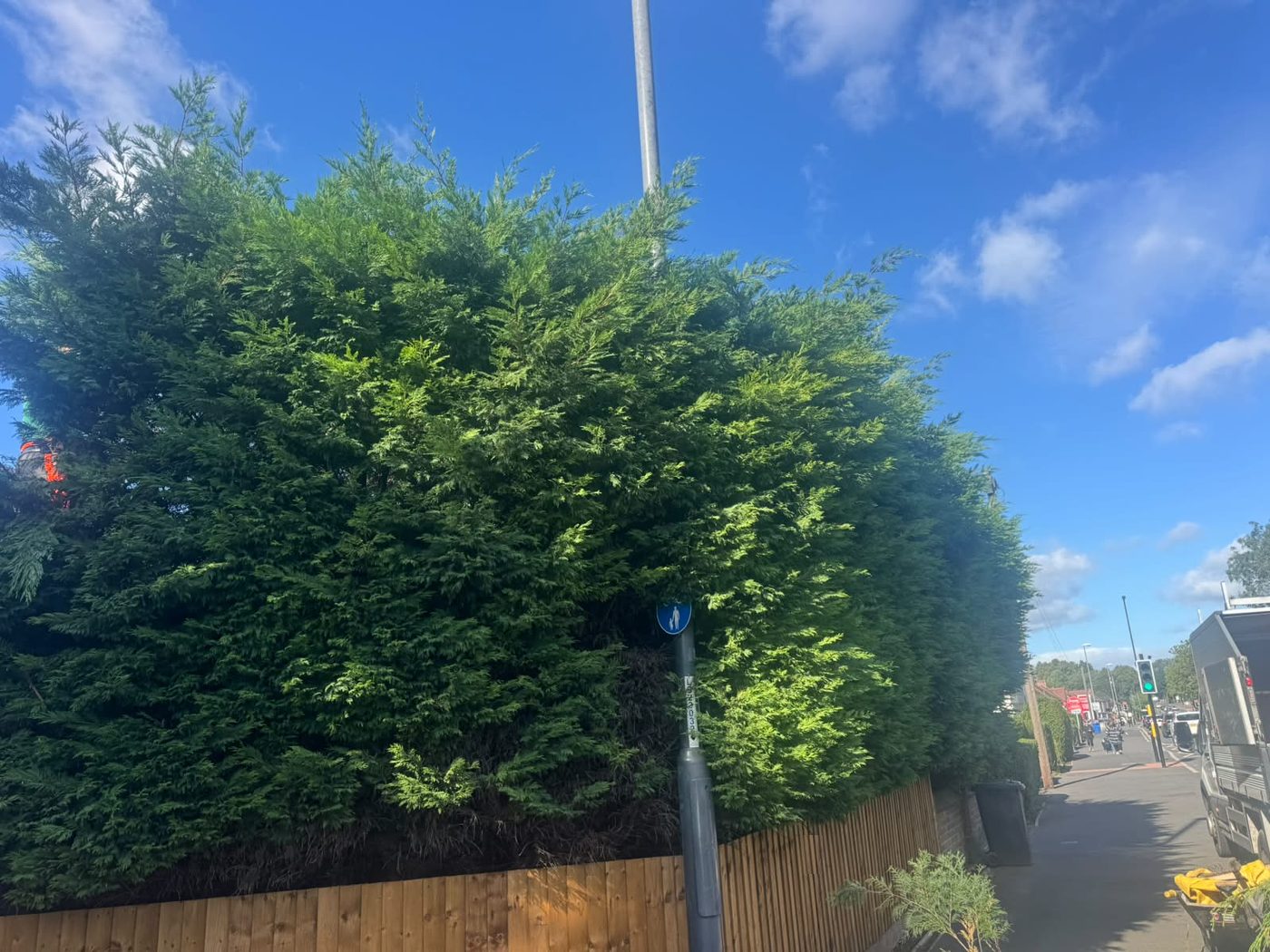
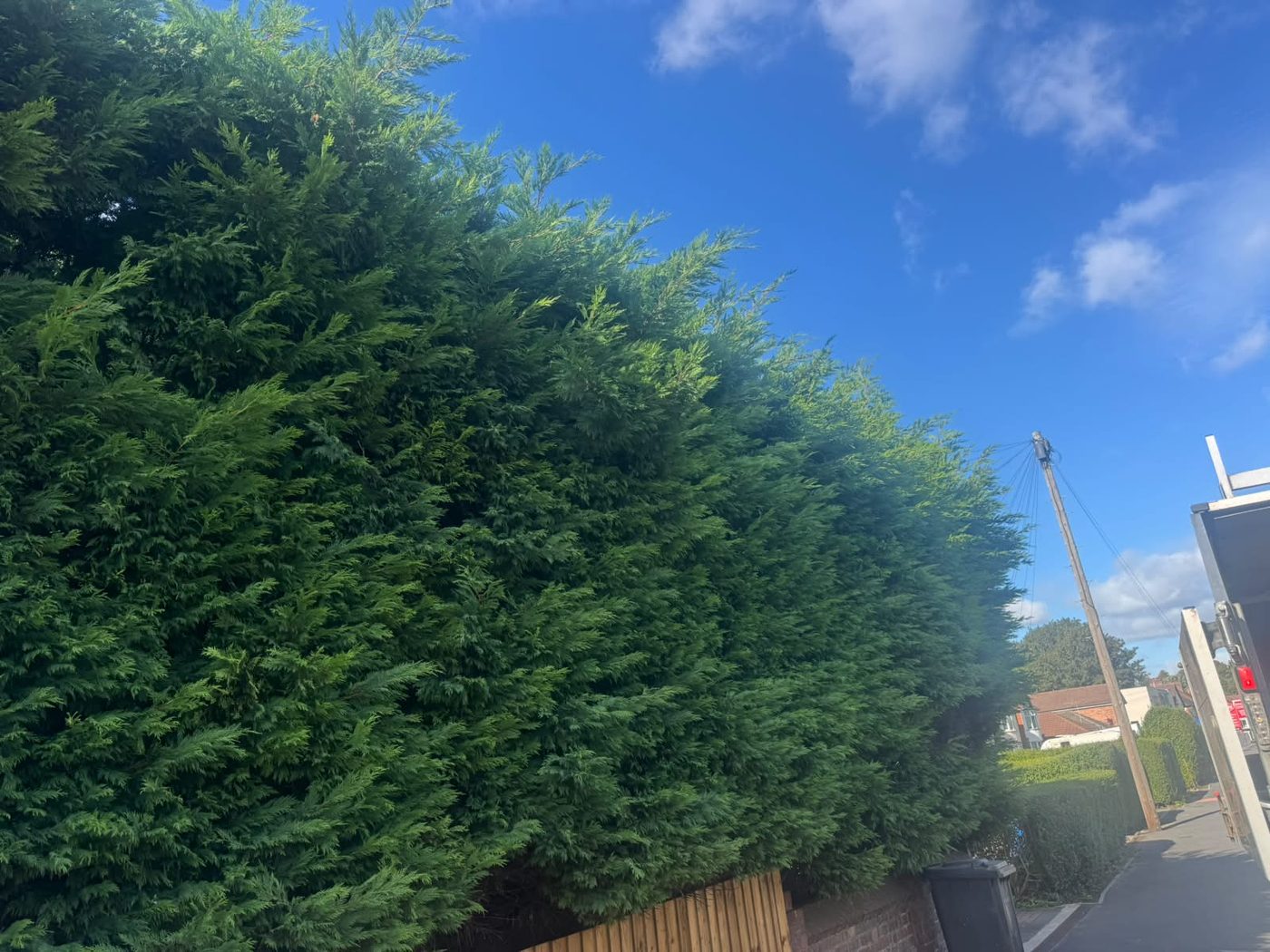
A long run of Leyland cypress on a corner plot, which means two elevations of hedge rather than one, with a pavement and a road on the outside of it. It had been left to run and was standing clear of the fence by roughly the height of the fence again, billowing over the top in a rolling line rather than holding any shape.
The fence behind it had recently been replaced, which is usually the point at which a hedge like this gets dealt with. A new fence makes the thing growing over it look twice as bad, and it also makes the owner realise how much of the garden the hedge had taken.
The One Thing That Decides a Leylandii Reduction
Leyland cypress will not reshoot from old brown wood. That is the whole job in a sentence. Cut into the green and it thickens up and recovers; cut past the green into the bare brown inside and that face stays bare, permanently, because there are no dormant buds in there to break.
So a reduction like this is not a question of how low the owner wants it. It is a question of how far in the green growth goes, which is decided by how long the hedge has been left, and you find out by getting into it and looking. On a hedge this size there is usually a good depth of green on the top and the outer face and much less on the inside, so the top comes down further than the sides come in.
Yew is the exception people have heard about — yew will break from old wood and can be cut right back to the frame. Most conifers will not, and leylandii is firmly among those that will not. There is more on where that line sits in can you reduce the height of an overgrown conifer or leylandii hedge?
The Bit Everyone Forgets: Nesting Birds
All wild birds’ nests are protected while they are in use or being built, under the Wildlife and Countryside Act 1981, and it is an offence to damage or destroy one. The main nesting season runs roughly from the start of March to the end of August, and a dense conifer hedge is about the most attractive nesting site a garden offers.
That does not mean a hedge cannot be touched in summer. It means it has to be checked first, properly, and the work has to stop or move if a nest is found. On a run this size that check is a job in itself. If there is no urgency, the cleanest answer is to book hedge reductions for the autumn or winter. Our guide on cutting a hedge when birds are nesting goes through what the check involves.
How the Job Ran
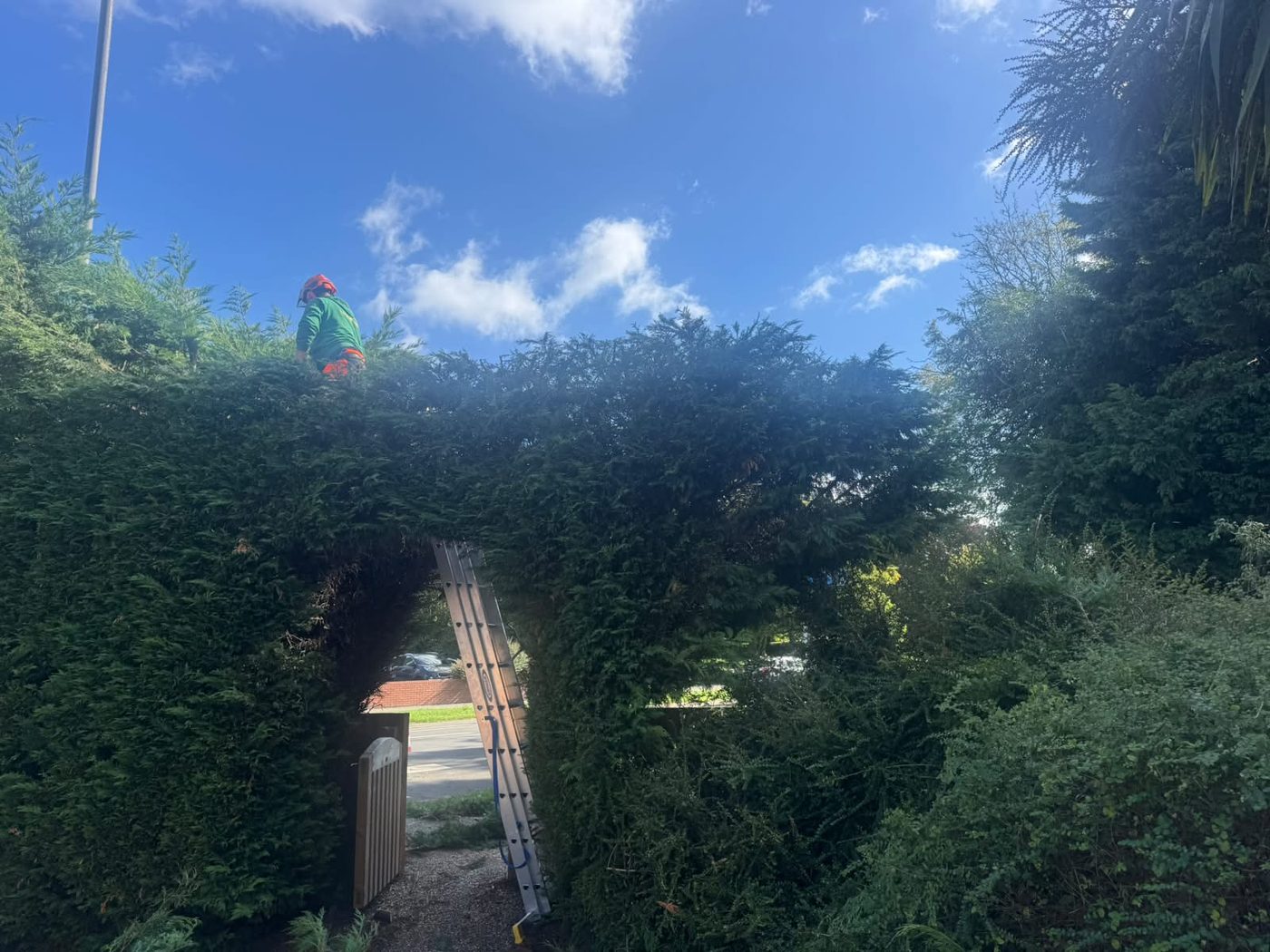
The top came down first, cut to a line rather than by eye, so the finished run is level along its length instead of following the ground. Then both faces were taken back, and the archway through the hedge — the way in from the road, with a gate in it — was squared up rather than lost.
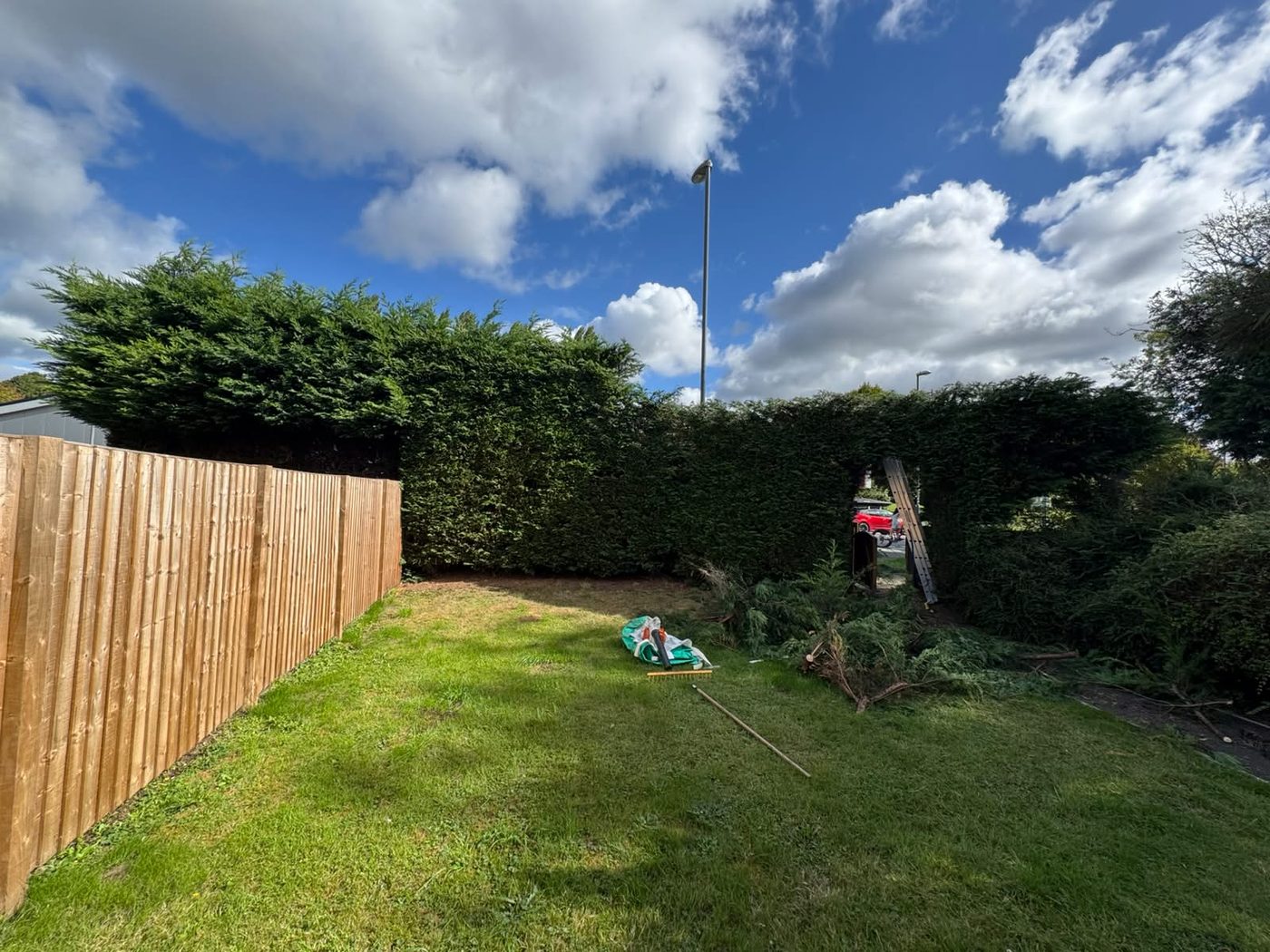
A hedge this size produces a startling volume of arisings, and on a roadside boundary all of it has to come off the pavement rather than sit on it. Clearing as you go is as much a part of the job as the cutting, and it is the part that decides whether the customer and everybody walking past is glad you came.
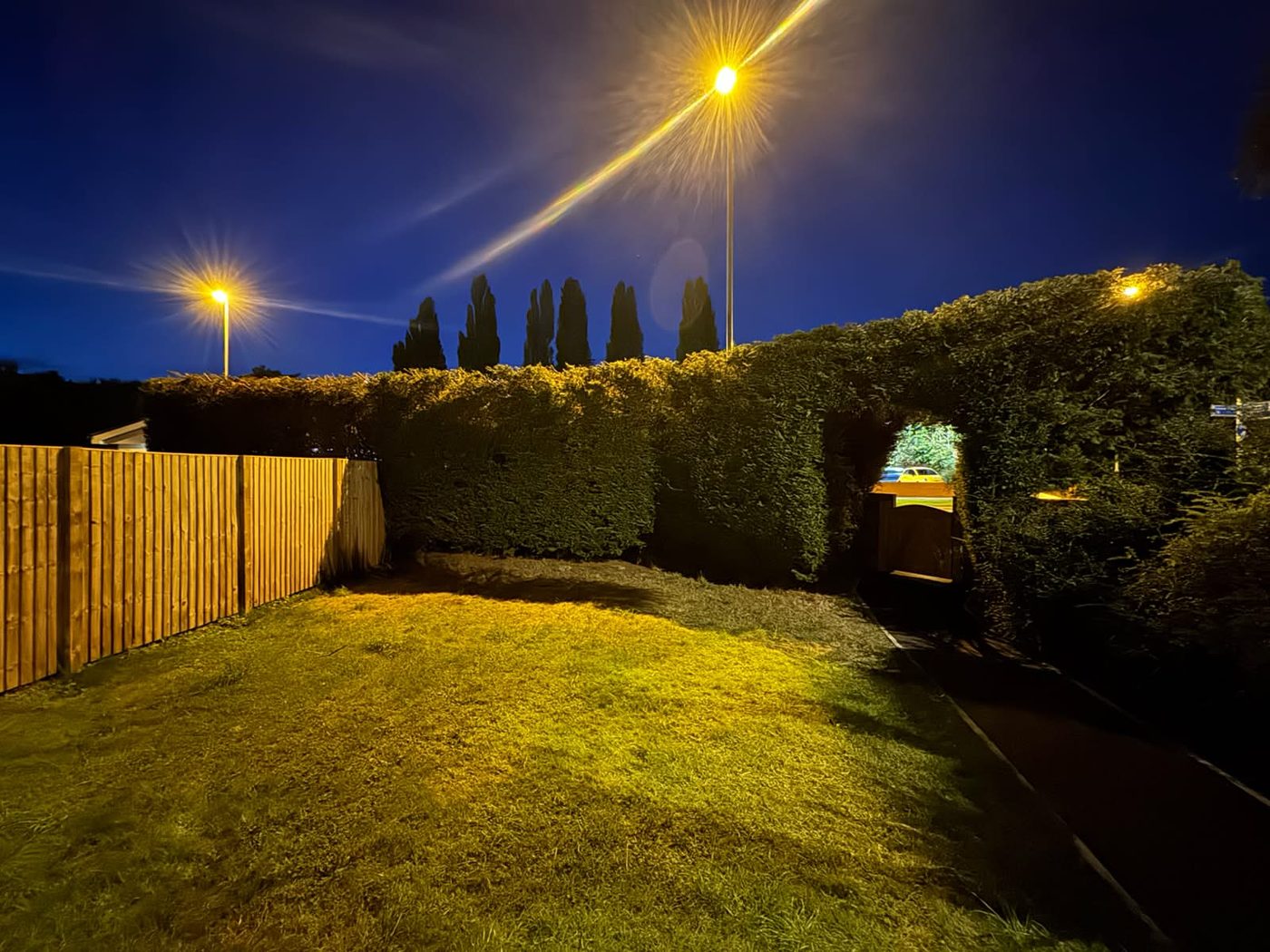
The photograph at the foot of this page was taken after dark, cleared and raked off. It is not the flattering shot, but it is the honest one.
Keeping It That Way
A hedge that has been reduced hard needs cutting more often than one that has been kept, at least for the first couple of seasons, because it puts its energy into the cut faces and thickens up fast. Once or twice a year after that holds the shape and, more to the point, keeps the cutting inside the green — which is what stops you ever being back in this position. How often should hedges and conifers be cut? goes into the timing.
If the hedge is on a boundary, it is also worth knowing where you stand before you start, particularly on the side facing someone else’s property. Who is responsible for overhanging trees and hedges between neighbours? covers it.
Photographs of our own work. No two gardens are the same, so what a job like this takes at your property is something we would want to look at first — ring 07780 727385 or send a photograph.