 Herring
 What Was There
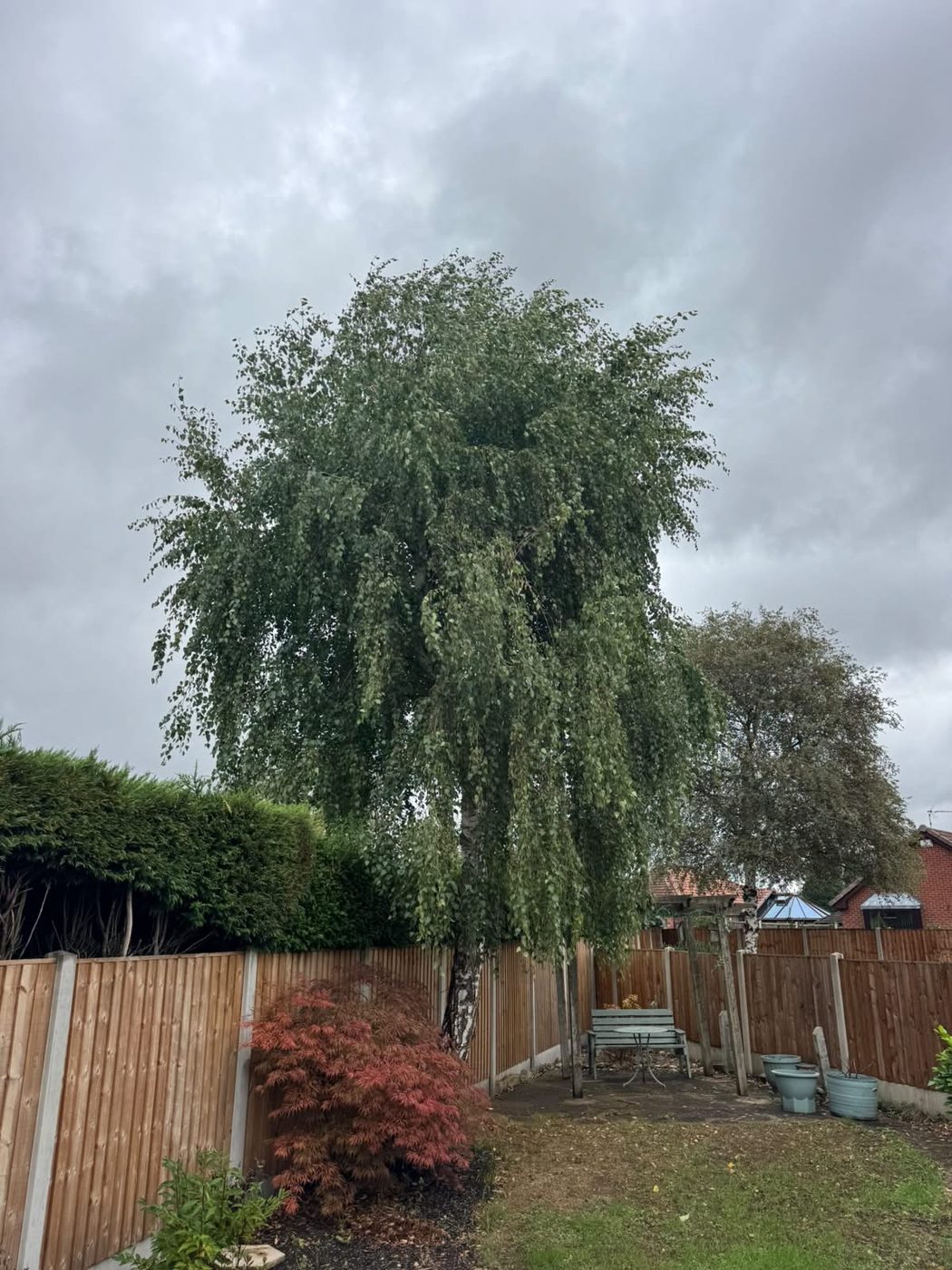
A mature weeping birch, and a good example of a tree that was the right size when it went in and the wrong size a long time later. Birch is often planted in a small garden precisely because it is light and airy and does not cast the dense shade a sycamore or a horse chestnut would. What catches people out is the spread. The weeping forms in particular put on width rather than height, and the shoots hang down to head height and below all the way round, so the tree quietly takes over the footprint it stands in.
This one had reached the point where the crown ran past the trunk in every direction and the weeping shoots were hanging over the fence into the garden next door. Underneath it were a seating area, a red acer in the border and a conifer hedge along one boundary — none of which had much room left above them, and none of which was going to be moved.
Why It Came Down in Sections
The straightforward way to take a tree down is to fell it: one cut at the base and the whole thing goes over into a space you have picked in advance. It is far quicker, and in a garden like this one it is simply not available. There was no space anywhere in the plot big enough to lay that crown down in, and the things it would have landed on — a fence that had clearly just been replaced, a hedge, the seating area, and a neighbour’s garden — were the reason the job was being done in the first place.
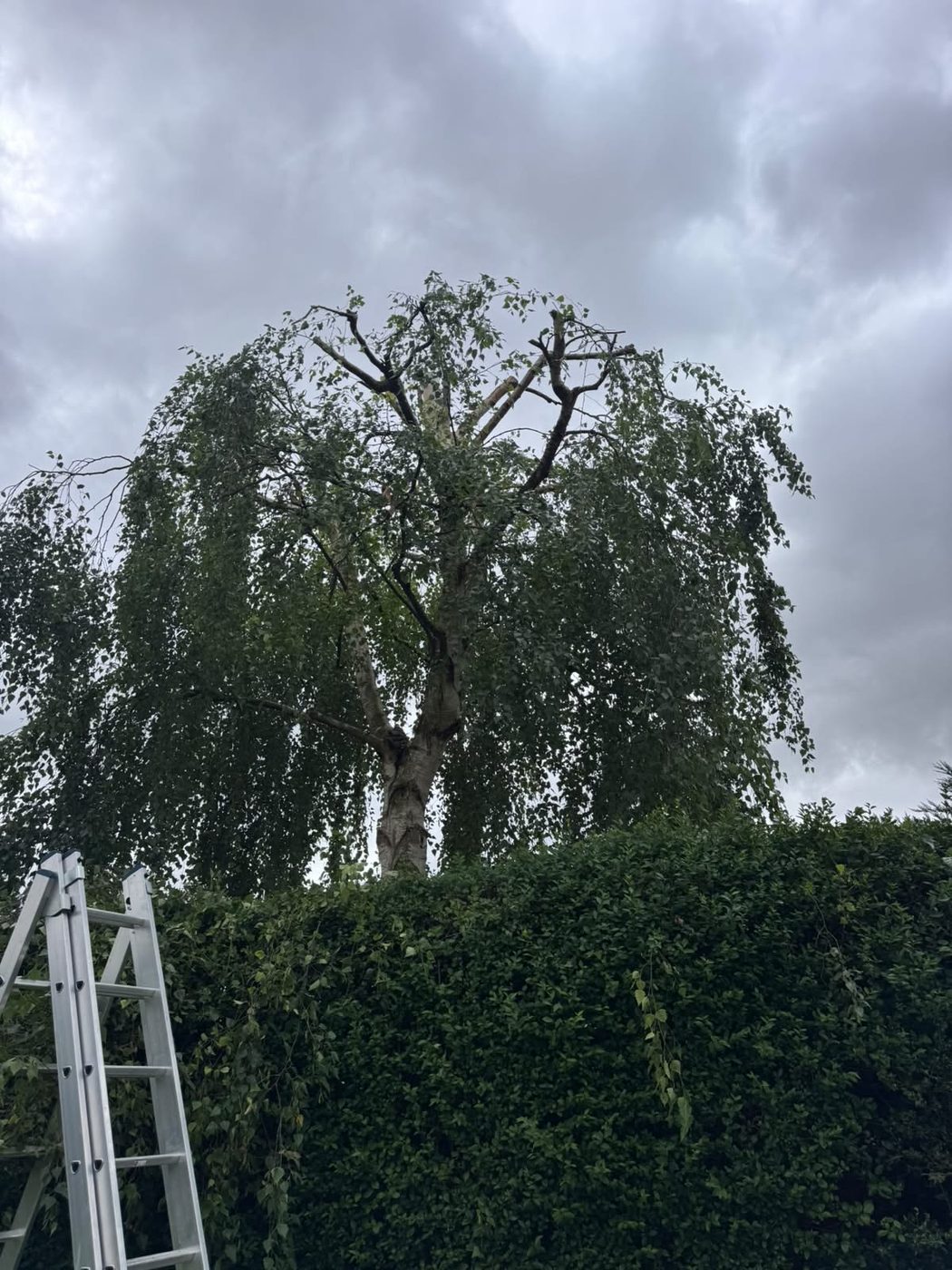
So it came down the other way: taken apart from the top in pieces small enough to control, working down rather than cutting at the base. The upper leaders came off first, which is the stage the second photograph shows, then the weeping curtain was worked down in sections and the stem reduced from there. Nothing gets dropped until there is a cleared spot underneath it to drop into.
It is slower and it takes a great deal more setting up, which is the honest reason sectional work is a bigger job than felling. It is also the only way to get a tree that size out of a garden that size without damaging what is underneath it. There is more on how it works in our guide to sectional tree dismantling in Derby.
Things Worth Knowing If You Have One
Birch is not a tree to leave too long. It is relatively short-lived as garden trees go, and once the limb ends are dying back and the crown is thinning from the inside the options narrow quickly. Worth knowing separately: some of the small weeping birches sold for gardens are top-worked cultivars, grafted at head height, and a heavy crown sitting on a graft union is a different proposition from a tree that has grown its own frame. It is one of the things worth looking at before deciding what a birch can take.
Reduction is sometimes possible and sometimes not. Birch does not take hard pruning well and it bleeds heavily if it is cut in late winter or early spring, so timing matters more with birch than with most things. Our guide on pruning, crown reduction and crown thinning sets out what each one actually means, and how to tell when a tree needs to come out covers the point where reduction stops being the answer.
Before anything comes down, check whether the tree is protected. A Tree Preservation Order or a conservation area changes what you are allowed to do and the notice you have to give, and it is the council’s decision rather than ours. Do you need permission to cut down a tree in Derby or Nottingham? is the page to read first.
Photographs of our own work. No two gardens are the same, so what a job like this takes at your property is something we would want to look at first — ring 07780 727385 or send a photograph.