 Herring
 Terraced and semi-detached streets, tight side entries, conservatories, garages, and a neighbour’s greenhouse eighteen inches the other side of the fence — that is the situation most mature Derby trees are standing in. There is nowhere to drop them.
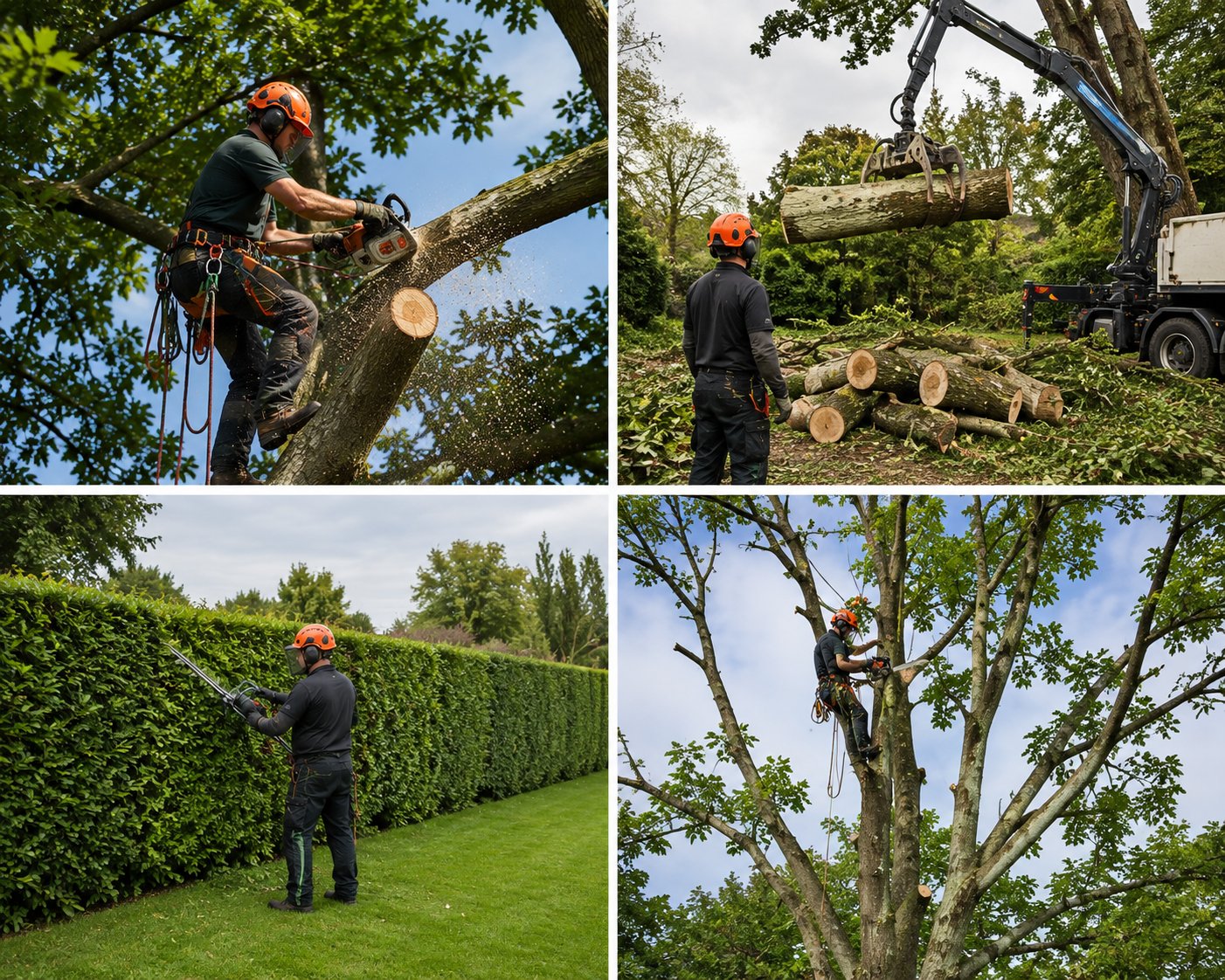
Sectional dismantling is the answer to that. Rather than cutting the tree at the base and letting gravity do the rest, the tree is taken apart from the top down and each piece is lowered under control. Nothing is dropped that has not been rigged first.
How the Tree Comes Apart
The work happens from the top because that is the only order that is safe. Removing weight from the crown first keeps the remaining stem stable; working upwards from the bottom would leave a progressively more top-heavy tree, which is the opposite of what anyone wants.
The climber works down the tree in stages, taking the outer limbs first, then the larger laterals, then the stem itself in manageable lengths. Where a piece is heavy enough to matter, it is attached to a rigging line before it is cut, so that when it comes free it swings into a controlled arc rather than falling. A second person on the ground manages that line and the landing area.
On a garden with no climbing point, or a tree too decayed to be safe to climb, the same job can be done from a powered access platform where the site allows one in. That is a decision we make on the visit, not on the day.
Why It Takes Longer Than Felling
A fell is one cut and a couple of hours of clearing up. A dismantle is dozens of cuts, each one set up, rigged, lowered, unclipped and cleared before the next one starts.
That is the honest reason a dismantle costs more than a fell, and it is worth understanding before you compare two quotes. If one price is dramatically lower than the other, it is usually worth asking which method it is based on — a quote for felling a tree that cannot be felled is not a cheaper quote, it is a different job.
What We Do Before Anyone Climbs
The tree is assessed before it is climbed, because a climber is putting their whole weight on it. Decay in the union of a major limb, a hollow stem, or a fungal bracket at the base changes how the job is done and occasionally rules out climbing altogether.
On the ground, we work out:
- Where each section can safely land, and what has to be moved first
- Where the chipper and truck stand, and how far the drag is
- Whether the neighbour needs to know, or needs to move a car
- Which route the brash takes out — side gate, through a garage, or over a fence
- Whether anything on the ground needs boarding or covering
- Where children, pets and anybody else on site will be for the day
Where a section has to come out over a boundary, we speak to the neighbour first. It is a two minute conversation that avoids a much longer one later.
Trees Growing Right Against the House
It is surprisingly common in Derby to find a sizeable tree a metre from a wall, usually because it was a sapling when the extension went up. People often assume it cannot be removed. It nearly always can.
What changes is the sequence and the pace. Sections come off smaller, more of them are rigged rather than dropped, and the work over the roof line is done deliberately slowly. Gutters, roof lights and conservatory glass are the things that get damaged on badly run jobs, so those are the things the plan is built around.
When We Will Tell You Not to Bother
Dismantling is the expensive way to remove a tree, so it is worth being sure the tree needs to go. If the real problem is light, overhang or a couple of branches on the roof, a crown reduction or a crown lift is very often the cheaper and better answer, and you keep the tree.
We will say so on the visit. A dismantle you did not need is not a job worth having.
Ready to book Sectional Tree Dismantling in Derby, or still have a question?
Get In Touch →