 Herring
 Conifer hedges are some of the most common in Nottingham gardens — fast-growing, dense, and effective as a screen — but they're also the species we see damaged most often by well-meaning but incorrect cutting. Unlike most broadleaf hedges, conifers generally will not produce new growth from old, leafless wood, which means reducing their height or width has to be handled very differently.
Why Conifers Are Different
Most conifer species — leylandii, western red cedar, most cypress varieties — only carry live, green foliage on the outer part of their growth. Cut back into the older, bare wood beneath that green layer, and in most cases nothing will ever grow back from that spot. The result is a permanent brown or bare patch that no amount of feeding or patience will fix.
This is the single most common mistake we're called out to remedy: someone cuts a conifer hedge back hard to reduce its height, and ends up with a row of brown gaps along the top instead of the neat, lower hedge they wanted.
How to Reduce Conifer Height Safely
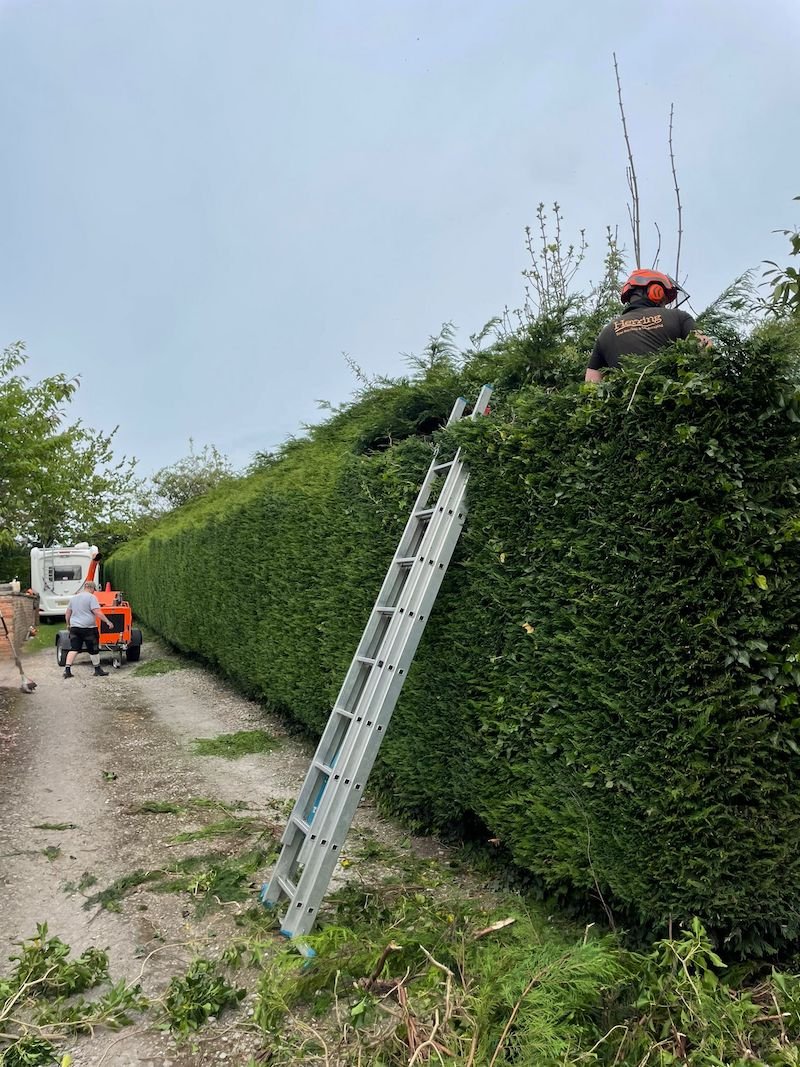
The safe approach is to cut back to just within the green growth, never into bare wood, and to accept that a significant height reduction on an overgrown conifer hedge may need to happen gradually over more than one season — allowing the hedge to put on a little fresh growth each year that then gives us slightly more room to cut into on the next visit.
For hedges that have been left to grow well beyond the point where this is possible without exposing bare wood, we'll be honest that some brown patches may be unavoidable, and we'll talk through realistic options rather than promising a result we can't deliver.
Height Rules and Neighbour Disputes
Conifer hedges are also the hedge type most likely to end up in a dispute with neighbours, and they're specifically covered by high hedge legislation in England — under the Anti-Social Behaviour Act 2003, local councils can get involved where a evergreen hedge over 2 metres is seriously affecting a neighbour's reasonable enjoyment of their property. Keeping a conifer hedge at a sensible, regularly maintained height is by far the easiest way to avoid this becoming an issue at all.
Regular Maintenance Prevents the Problem
The best way to avoid ever facing a difficult conifer reduction is straightforward: keep the hedge trimmed regularly so it never gets tall enough, or dense enough, for a reduction to expose bare wood in the first place. We cover setting up that kind of ongoing schedule in our regular hedge maintenance guide.
- Cuts kept within live, green growth wherever possible
- Significant reductions staged over more than one season
- Honest advice where some browning is genuinely unavoidable
- Awareness of high hedge legislation for boundary disputes
- Regular maintenance recommended to prevent the problem recurring
Booking Conifer Reduction in Nottingham With Herring
Every conifer reduction visit is carried out by our own local, experienced team, fully insured and backed by a free, no-obligation quote before any work starts. We clear all cuttings as standard, so your garden is left as tidy as we found it, just with a properly maintained hedge — not a pile of trimmings left for you to deal with.
For the full range of hedge maintenance services we provide across Nottingham, visit our Hedge Maintenance Nottingham page.
As well as Nottingham itself, we regularly carry out conifer reduction across Wollaton, Beeston, West Bridgford, Carlton and the wider Nottinghamshire area. If you're not sure whether we cover your particular street or village, just ask — in most cases the answer is yes.
Getting started is simple: call us or fill in the enquiry form below with a few details about your hedge and what you'd like done. We can often give a rough idea of cost over the phone, and we're happy to arrange a site visit for larger or more complex jobs. Once you're happy with the quote, we'll book a date that suits you, carry out the work, and clear every bit of cuttings before we leave.
Ready to book Conifer Reduction in Nottingham, or still have a question?
Get In Touch →